Schoenberg the Romantic
Arnold Schoenberg is generally seen as one of the great innovators of 20th-century Western art music. Many musicians approach his scores as hallmarks of modernism–and perform them accordingly. In this light, Schoenberg’s earlier free atonal piano music may come across as a ‘not yet’: a preliminary stage in the development towards dodecaphony. However, these compositions form a world in their own right.
Just like Schoenberg himself, pianists of his time were trained in the 19th-century performance tradition. His music was written for such contemporaries in the first place. How would they, shaped by works of composers such as Liszt, Brahms and Reger, read scores like Schoenberg’s Op. 11 and 19?
This presentation argues that the freedom of timing known from many early-20th-century recordings formed an integral part of the ‘horizon’ of these compositions. Even Schoenberg’s atonal scores are based upon loci communes (shared musical conventions) that link them to the tonal music of that time. Awareness and embodied knowledge of such loci enables performers to identify with a musical composition, to read the score as an invitation to play with it. In this way, performance habits from Schoenberg’s time may inspire performers to ‘improvise’ with his scores.
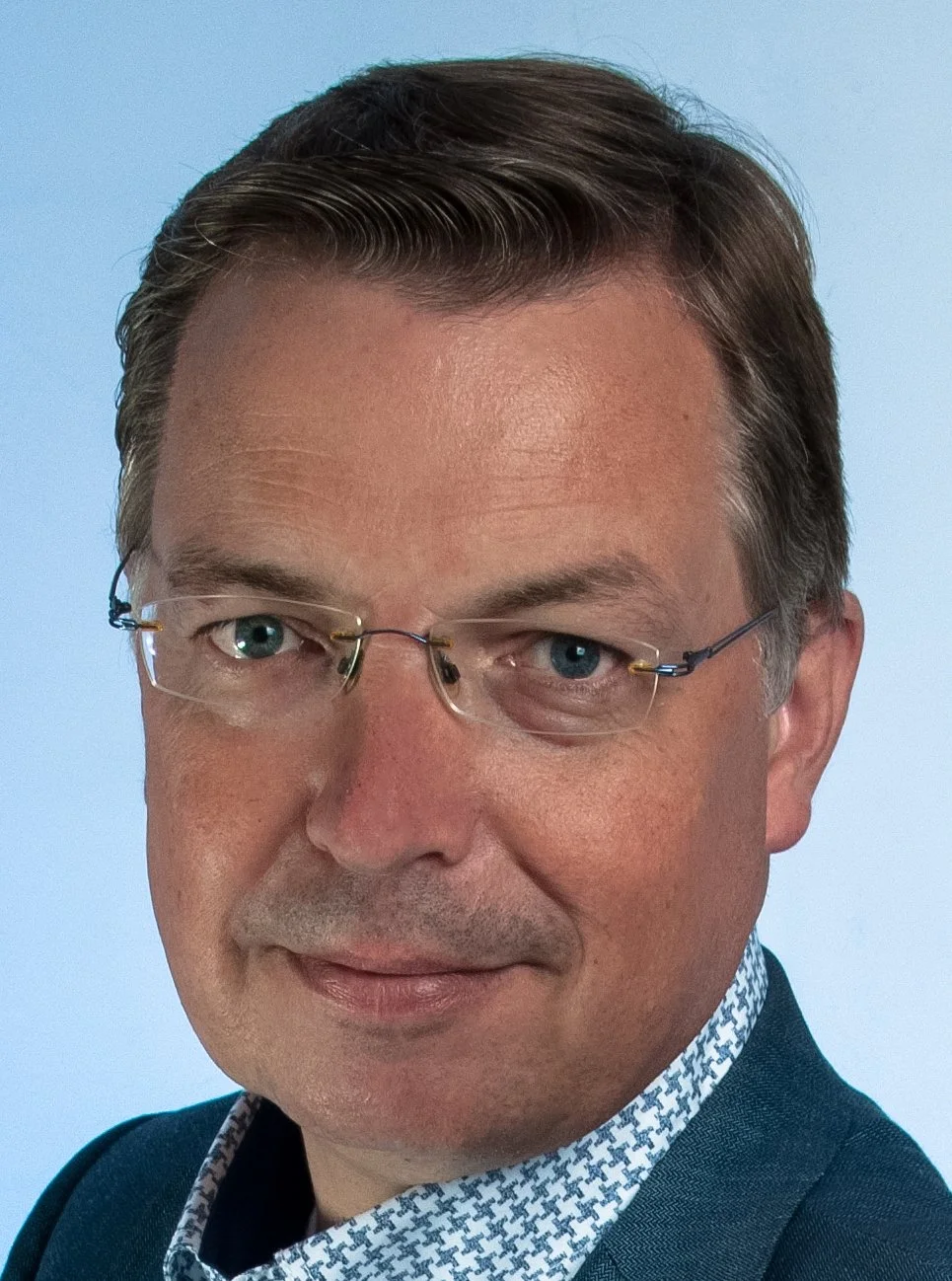
Dr Bert Mooiman
Bert Mooiman is a Dutch pianist, organist and music theorist who studied at the Royal Conservatory in The Hague, obtaining solo diplomas in piano and organ cum laude in 1987 and 1989. He was a prize winner at several international organ competitions and completed his music theory studies in 2003 with an article on Olivier Messiaen and French harmony.
From 1993 to 2000, he worked as a piano soloist for Dutch National Ballet. Since 2000, he has taught music theory, piano and improvisation and supervised research at the Royal Conservatoire. He obtained his PhD from Leiden University in 2021 with a thesis on an improvisatory approach to nineteenth-century music and is involved in international projects on improvisational education. As an organist, he frequently performs with the Rotterdam Philharmonic Orchestra and is a strong advocate for historical keyboard instruments, including late-nineteenth-century pianos.
Royal Conservatoire The Hague