From Isorhythm to Algorithm: Process and Transformation in Composition
Process has long occupied a central position in the creation of music, as it serves as a means through which composers generate coherence, transformation, and structural unity. While the term is most closely associated with the work of Steve Reich, whose influential essay Music as a Gradual Process (1968) articulated the idea of audible compositional procedures unfolding in real time, the roots of process-based thinking extend far beyond twentieth- and twenty-first-century minimalism. There is a lineage of musical process from medieval isorhythmic motets, in which recurring rhythmic and melodic cycles create large-scale organizational frameworks, to the cyclical and additive procedures found in Indian classical music, where repetition and gradual variation produce evolving musical states.
Later composers expanded and reimagined “process” as a compositional strategy. In David Lang’s Cheating, Lying, Stealing, process functions as a mechanism of expectation and disruption, generating musical energy through the manipulation of recognizable patterns. In Sofia Gubaidulina’s Offertorium, procedural transformation operates on a deeper structural level, where the gradual fragmentation and reconstruction of thematic material become metaphors for sacrifice and renewal. These works demonstrate how process can move beyond an easily-recognizable, transparent tool toward expressive, symbolic, and narrative ends while retaining its generative power.
My own work approaches process through procedural algorithms as catalysts for musical transformation. Rather than producing fixed outcomes, these systems generate iterative states in which each transformation becomes the source material for the next. Through recursive processes, rule-based operations, and evolving parameter relationships, musical structures emerge that balance predictability with unpredictability. For me, process is less a technique than a way of generating musical change. Each iteration of a procedure creates conditions for the next, allowing a piece to develop in directions that are difficult to predict at the outset.
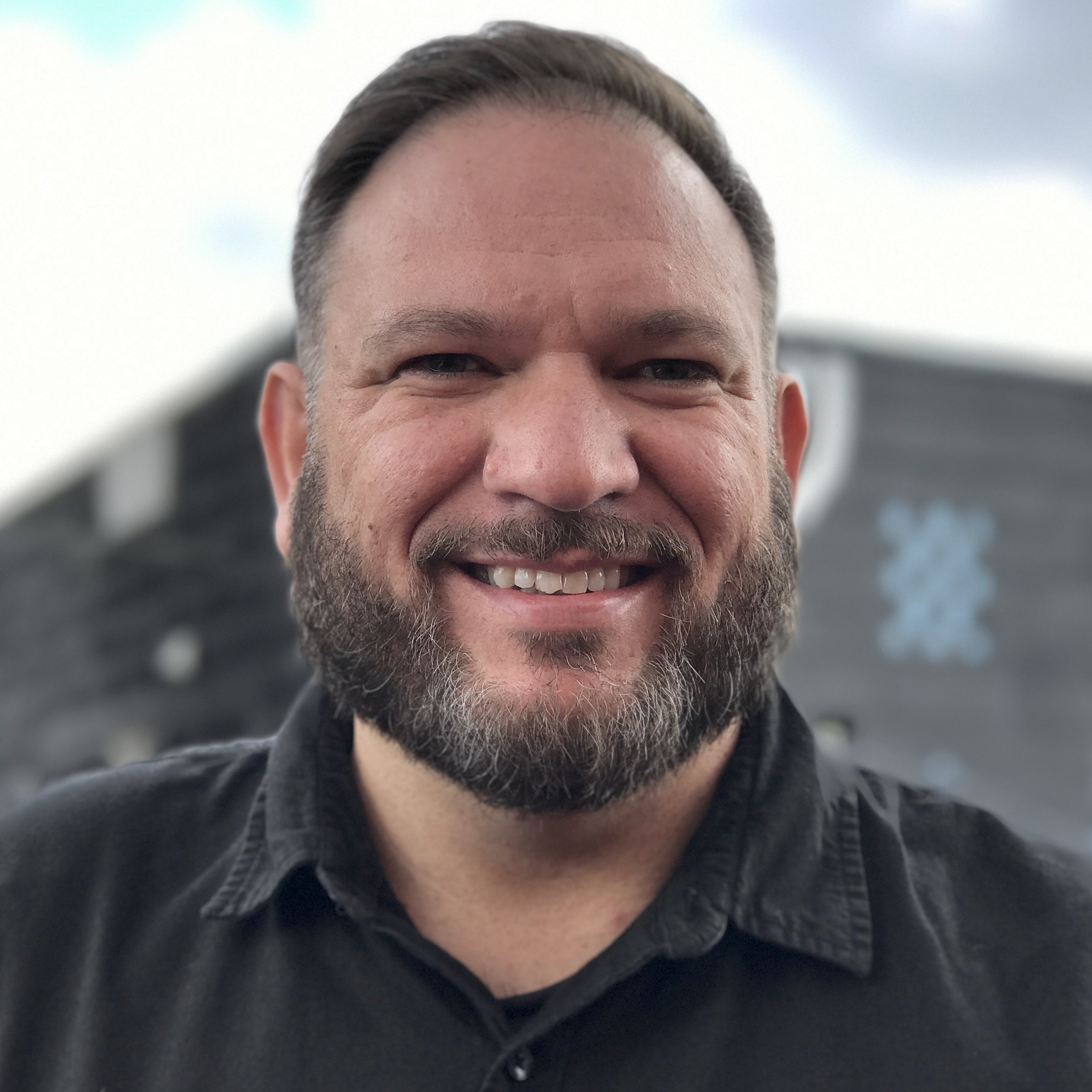
Asst Prof Paul Coleman
Equally at home in a variety of settings, Paul Coleman enjoys a multi-faceted career as a composer, sound engineer, and professor of composition and audio arts. Paul has appeared on NPR's Tiny Desk Concerts with his group Ensemble Signal, where he is a founding member and Sound Director. In live sound, Paul has engineered over 200 shows at venues around the world including Carnegie Hall, Jazz at Lincoln Center, Alice Tully Hall, Tokyo Opera City and Nagano Hall Japan, Teatro Colón Argentina, Victoria Concert Hall Singapore, and the Walt Disney Concert Hall. Paul's producer and recording credits can be found on harmonia mundi, Mode Records, Cantaloupe Music, Artist Share, New Focus, and others, and is a Grammy voting member of the Recording Academy. In these various capacities, Paul has worked closely alongside fellow composers and artists such as Steve Reich, Ornette Coleman, David Lang, Julia Wolfe, Michael Gordon, George Lewis, Howard Shore, Kaija Saariaho, Irvine Arditti, and Radiohead guitarist and composer Jonny Greenwood.
Paul is active as a composer, having pieces performed in portrait concerts at venues such as John Zorn's The Stone, on multiple tours of historic carillons throughout North America, Europe, and Asia, and an installation at the Massachusetts Museum of Contemporary Art. He serves as Assistant Professor of Composition and Audio Arts at the Pennsylvania State University, where he teaches Composition, Recording and Live Engineering, and Electronic Music, and is proud to be an Elseways Media founding artist.
Pennsylvania State University