Interweaving Presence: Improvisation, Neural Audio and the Ethics of Authorship
This presentation proposes music improvisation as a method of interweaving: a way of making relations audible between bodies, histories, futures, individual voice and collective listening. Improvisation becomes a rigorous test-bed for AI creativity claims precisely because it is situated, contingent and socially negotiated in real time.
The discussion centres on my neural-audio instrument: a RAVE model trained exclusively on my saxophone playing. As a deliberately self-sourced system, it shifts “AI collaboration” away from technical novelty towards questions of ethical relation: what kinds of presence are invited, amplified or silenced when neural audio enters live practice, and what responsibilities follow?
Three theoretical perspectives guide the discussion. Marcel Mauss’s account of the gift frames sound-making as exchange, generating obligations of credit, acknowledgement and return. Lucy Suchman’s concept of situated action anchors agency in the live moment and its infrastructures, positioning authorship as something negotiated through rehearsal, design and labour. Karen Barad’s concept of intra-action further articulates how authorship and responsibility emerge through the entanglement of performer, AI model, acoustics and audience.
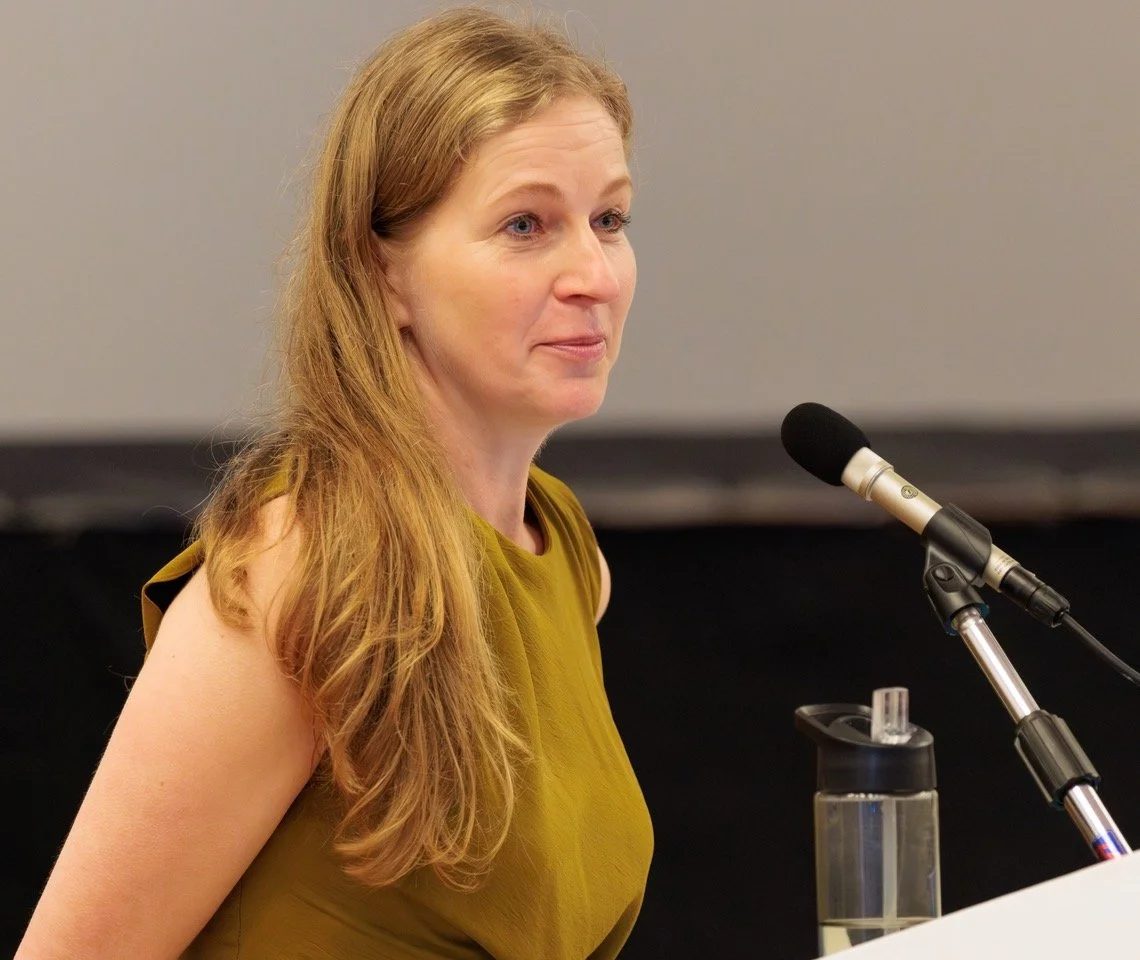
Prof Franziska Schroeder
Franziska Schroeder is Professor of Music and Cultures at Queen’s University Belfast, a saxophonist and improviser working at the intersections of music improvisation, AI, embodied performance and accessible digital technologies. Her research explores relational authorship, ethics and the politics of listening in contemporary music practices, including neural audio and performer-led approaches to provenance and accountability. She is the author of Soundweaving: Writings on Improvisation, which develops improvisation as an interdisciplinary practice of connection and process. She performs internationally and develops practice-research projects foregrounding inclusive, participatory and critically situated methods.
Queen's University Belfast